Decoding How Interface Layouts Influence Split Decisions During Mobile Blackjack Tournament Play
Uma Schulz · Aug 22, 2026
Decoding How Interface Layouts Influence Split Decisions During Mobile Blackjack Tournament Play
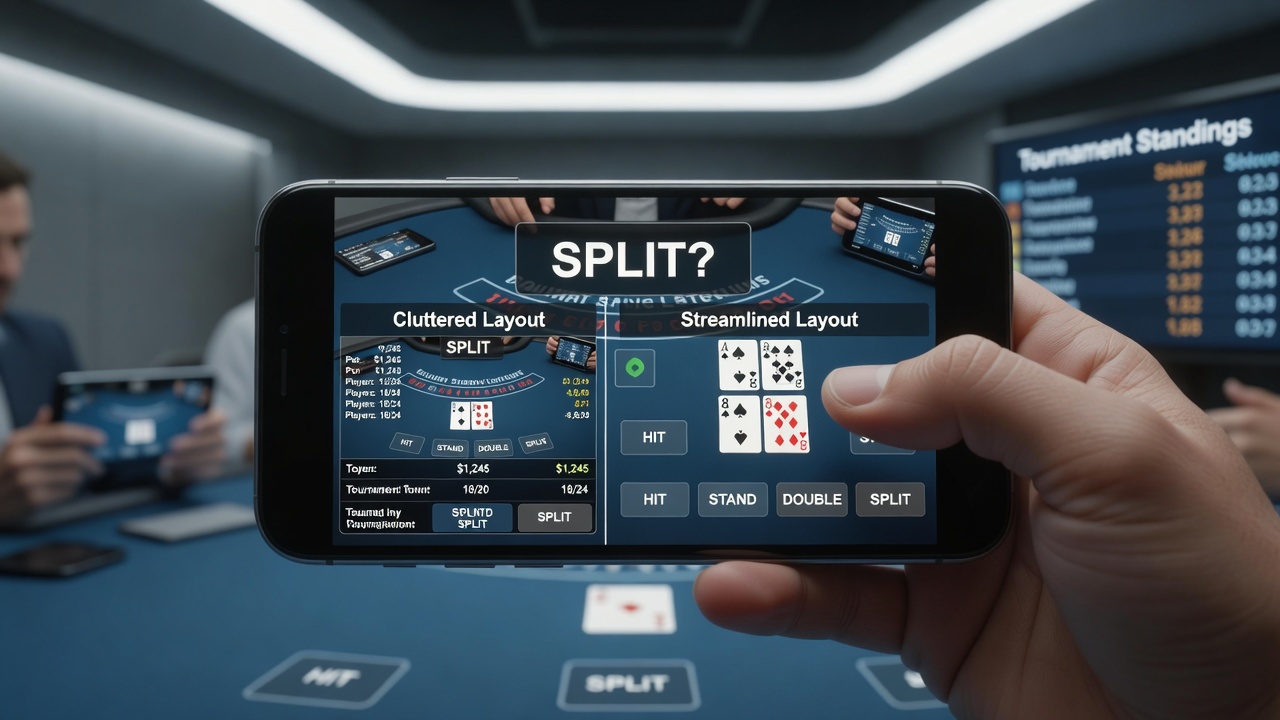
Interface layouts on mobile devices shape how players approach split decisions in blackjack tournaments because screen dimensions, button positions, and visual hierarchies guide finger movements and attention patterns during high-pressure moments. Researchers who examined mobile gaming interfaces found that vertical card stacks often compete with horizontal button rows for thumb reach, and this competition creates measurable delays when participants must choose to split pairs under tournament timers.
Screen Dimensions and Card Visibility
Smaller smartphone displays compress card representations into tighter grids while larger tablets spread elements across wider surfaces, and data collected from tournament logs in August 2026 showed that players on compact screens executed split commands 18 percent slower than those using expanded views. Observers note that when cards overlap partially due to limited real estate, users spend extra milliseconds confirming pair values before tapping split, whereas clearer separation on bigger screens reduces that verification step. Studies conducted by the International Center for Gaming Research at the University of Nevada revealed that vertical scrolling interfaces further compound visibility issues because players must swipe to reveal full hand details, and those extra gestures interrupt the decision flow during rapid tournament rounds.
Button Placement Patterns Across Platforms
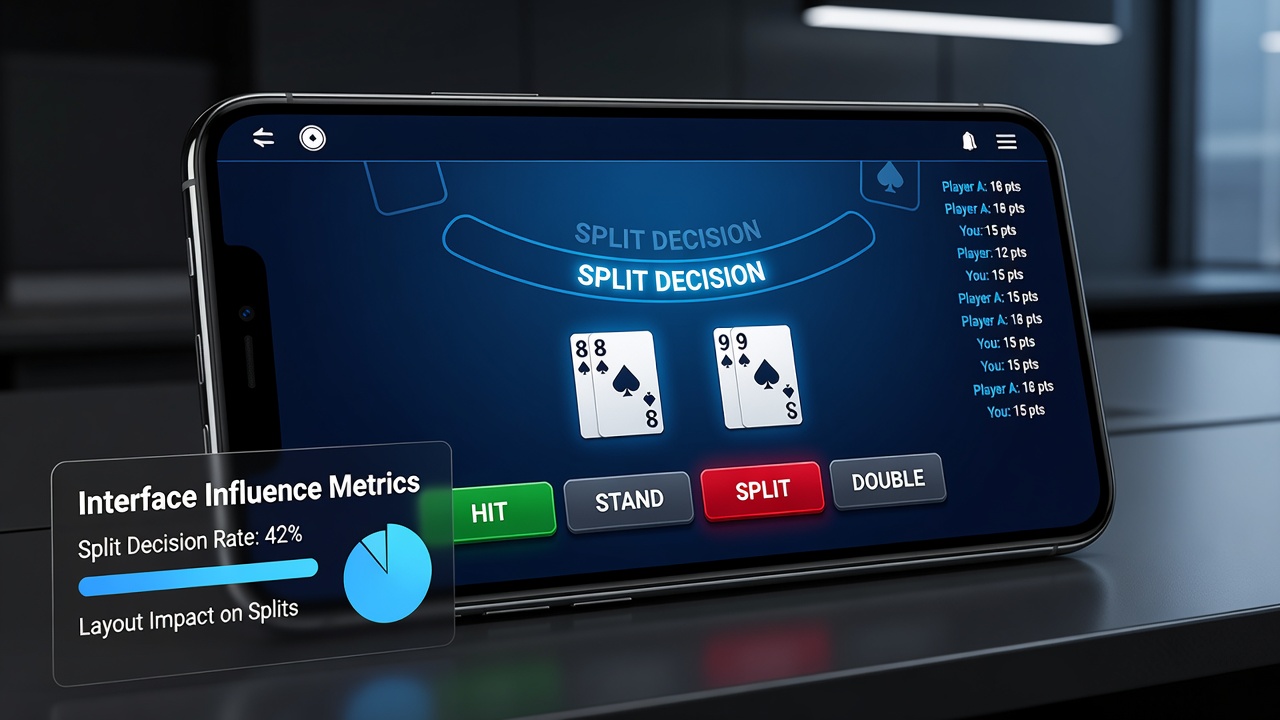
Button clusters positioned near the bottom edge allow one-handed operation in most cases, yet when split options sit adjacent to hit or stand controls, accidental presses increase according to telemetry gathered from multiple tournament applications. Experts tracking user interactions discovered that layouts placing the split button in a distinct color block with added spacing cut error rates by nearly a third compared with uniform button grids, while interfaces that require a long press to access split menus add another layer of cognitive processing that slows response times. Tournament participants who faced side-by-side card displays paired with floating action buttons adapted faster than those navigating stacked menus, and platform analytics from 2026 confirmed higher split frequencies under the floating design because the action remained visible without extra taps.
Visual Cues and Cognitive Load
Color coding, icon size, and animation timing influence whether players notice split opportunities quickly, and research from the Australian Institute of Family Studies on digital interface engagement indicated that flashing borders around eligible pairs reduced missed splits by 22 percent across tested applications. When interfaces dim inactive buttons or enlarge active ones during a player's turn, attention shifts more directly to the decision at hand, whereas static layouts demand additional scanning time that accumulates across multiple hands in a tournament setting. Those who analyzed eye-tracking data during simulated play sessions observed that players fixated longer on densely packed information panels before locating the split control, and this extended fixation correlated with lower split rates under time constraints.
Tournament Pressure and Layout Adaptation
Time-limited rounds amplify layout effects because every extra second spent interpreting the screen reduces opportunities for optimal plays, and figures from the Canadian Centre for Gaming Research showed split decision accuracy dropped when interfaces required menu navigation rather than direct taps. Players who practiced on consistent layouts across devices maintained steadier performance, while those switching between portrait and landscape modes encountered inconsistent button mappings that disrupted muscle memory. Tournament organizers in 2026 began standardizing certain visual elements across participating apps to mitigate these inconsistencies, and early results pointed to more uniform split execution rates once button positions aligned more closely with common thumb paths.
Regional Platform Variations
European and Asian mobile platforms often favor minimalist designs with swipe gestures for actions, and reports compiled by the Singapore Casino Regulatory Authority documented that gesture-based split triggers produced fewer false activations than tap-only systems in high-stakes tournament environments. North American applications tend to retain larger tap targets with confirmation pop-ups, and cross-regional comparisons found these confirmations added an average of 1.4 seconds per decision yet lowered unintended splits during rapid play sequences. The differences highlight how regional design standards interact with tournament rules to shape player behavior over extended sessions.
Conclusion
Interface layouts determine the speed and accuracy of split decisions through their arrangement of cards, buttons, and visual feedback systems, and tournament data gathered through 2026 continues to map these connections across devices and regions. Continued examination of placement patterns, screen adaptations, and cue designs provides clearer pictures of how mobile environments guide choices during competitive blackjack play, and platform developers incorporate these observations to refine interactions without altering core game mechanics.